


The most beautiful seaside villages of the Costa Brava
The Costa Brava preserves some of the most authentic and best-preserved fishing villages in the Mediterranean. Coves with beached boats, white houses facing the sea and fresh fish restaurants create a picture that has disappeared in many places, but which is still alive here. You will also be able to discover some of the best coves on the Costa Brava, many of them next to these seaside settlements.
From Cadaqués to Calella de Palafrugell, the Costa Brava brings together charming fishing villages, each with its own personality and Mediterranean essence. If you would like a more complete overview, you can consult our guide to the most beautiful villages in Girona.
The Hotel Aigua Blava, in Aiguablava (Begur), is in a privileged location, just a few minutes from some of the most beautiful fishing villages in Girona. This guide will help you explore them and easily organise them into a route.
The best fishing villages on the Costa Brava
Cadaqués — the most iconic fishing village in the Mediterranean
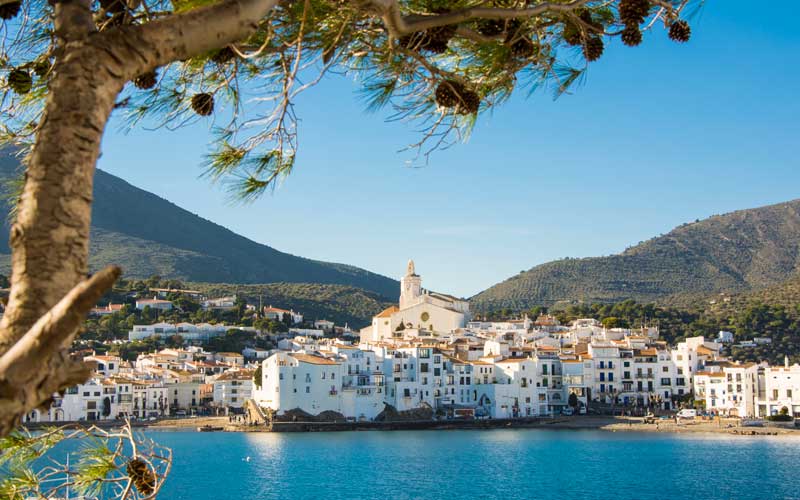
Cadaqués is, without a doubt, the most famous fishing village on the Costa Brava and one of the most recognisable in the whole Mediterranean. Its image, white houses cascading down over the bay, boats in the harbour, and the baroque church of Santa Maria crowning the whole ensemble, has been painted, photographed and described by artists from all over the world for more than a century.
The geographical isolation of Cadaqués explains its extraordinary preservation: surrounded by the Cap de Creus Natural Park and accessible only by a mountain road with more than 70 bends, the village escaped for decades the urban speculation that swept away other coastal settlements. Today it is still one of the few fishing villages on the Costa Brava where the original appearance remains practically intact.
Salvador Dalí lived in neighbouring Portlligat for decades and turned Cadaqués into an international cultural reference, attracting artists, writers and travellers who found in this fishing village an atmosphere impossible to replicate.
What to see and do in Cadaqués
- Historic centre of narrow white streets next to the fishing harbour
- Church of Santa Maria (18th century) with altarpiece painted by Dalí
- Salvador Dalí House-Museum in Portlligat: essential visit with compulsory advance booking
- Cap de Creus: the easternmost point of the Iberian Peninsula, 10 minutes away by car
- Fishing harbour: active, with fish market and traditional boats
- Nearby coves: Cala Nans, Es Llané, Platja Gran, accessible on foot from the village
Practical details
- 75 minutes from Hotel Aigua Blava
- Recommended visit: full day
- In summer, car access is regulated; it is recommended to arrive before 9:00 or use the park-and-ride car park with shuttle service
- Ideal for staying at least one night in order to experience the village without the day visitors
El Port de la Selva — true seafaring authenticity
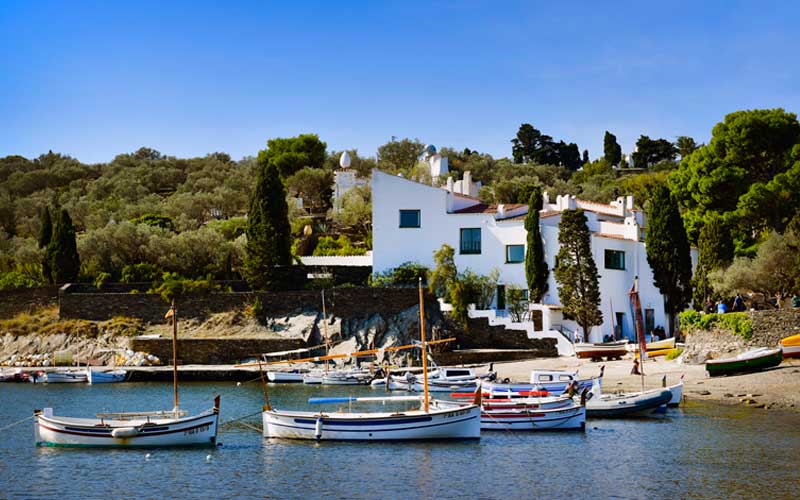
El Port de la Selva is the most authentic and least crowded fishing village in Alt Empordà. In the shadow of Cadaqués’ fame, it preserves an active fishing harbour, quiet streets even in August and a genuine seafaring identity that has not been replaced by the tourist industry.
Its fish market is still operating, its artisanal fishing boats set out at dawn, and its gastronomic offer —focused on fresh fish and seafood of the day— is one of the most highly valued and honest on the northern Costa Brava.
A few kilometres away lies the Monastery of Sant Pere de Rodes, one of the most impressive Romanesque complexes in Catalonia, with panoramic views over the Gulf of Roses and the Pyrenees that make the visit one of the most complete on the Costa Brava.
What to see and do in El Port de la Selva
- Active fishing harbour with fish market and traditional boats
- Quiet seafront promenade without large buildings
- Monastery of Sant Pere de Rodes (6 km away): 10th-century Romanesque, unmissable
- Cap de Creus coves accessible by boat or on foot from the village
- Seafaring gastronomy: fresh fish and seafood in restaurants by the harbour
Practical details
- 80 minutes from Hotel Aigua Blava
- Recommended visit: full day combining village and monastery
- Combines perfectly with Cadaqués on a route through Alt Empordà
- Parking is easier than in Cadaqués even in high season
Fishing villages near Begur
The immediate surroundings of Begur concentrate a series of small seafaring settlements that preserve, better than anywhere else on the Costa Brava, the essence of the old fishing villages: small scale, unaltered architecture, coves accessible only on foot or by boat, and an atmosphere that in July remains surprisingly peaceful.
All of them are less than 25 minutes from Hotel Aigua Blava, which makes it possible to visit them in complete comfort while combining them with the nearby coves.
Sa Tuna — Begur’s most picturesque seafaring settlement
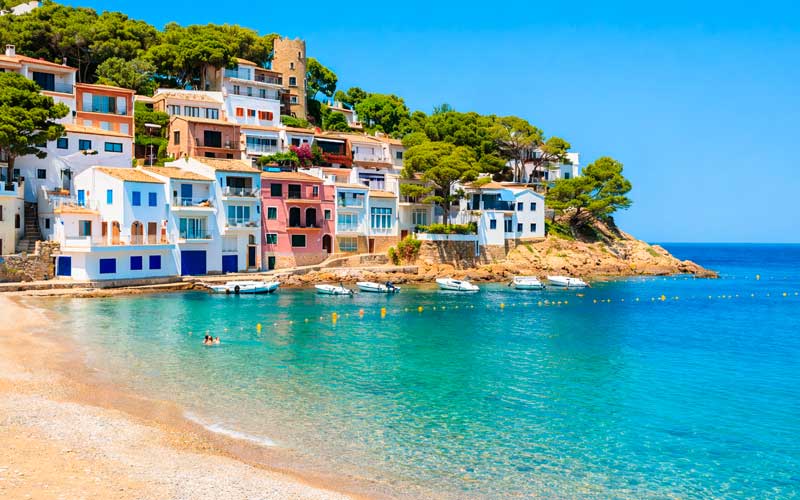
Sa Tuna is not an independent village, but a small seafaring settlement belonging to the municipality of Begur, and one of the most photogenic and special on the entire Costa Brava.
Its arc-shaped cove, with white and colourful houses by the sea, traditional boats on the sand and the surrounding pine trees, creates a Mediterranean picture that seems frozen in time.
Unlike other, more developed coastal enclaves, Sa Tuna retains its intimate and local character, with old fishermen’s huts still present on the seafront.
From here begins one of the most beautiful stretches of the Coastal Path, which connects with Aiguafreda and other sections of the coast, making it one of the most beautiful routes in the Begur area.
What to see and do in Sa Tuna
- Sa Tuna cove: calm waters and traditional boats
- Original fishermen’s huts next to the beach
- Coastal Path towards Aiguafreda (20 minutes on foot)
- Restaurant facing the sea: fresh fish cuisine with views over the cove
- Snorkelling: clear waters, abundant marine life and sheltered from waves in summer
Practical details
- 10 minutes from Hotel Aigua Blava
- Limited parking (outdoor and underground); it is recommended to arrive before 9:30 in July and August
- Going by boat is a great option: free mooring on buoys and boat service to reach the beach without getting wet
- Coastal Path connecting with Aiguafreda and S’Aixugador
Fornells — Begur’s most exclusive seafaring corner
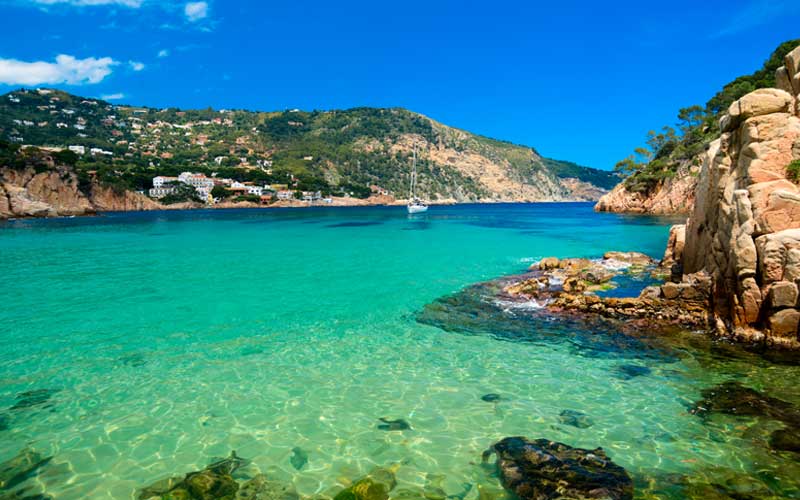
Fornells is not an independent village, but a small coastal settlement belonging to Begur, located facing Aiguablava bay. It is one of the quietest and least known enclaves in the area, ideal for those looking for a charming cove away from the busiest spots.
Made up of a small group of houses by the sea and a little jetty, Fornells preserves an intimate and relaxed atmosphere, strongly linked to its seafaring origins. Its protected location, opening onto one of the most beautiful bays on the Costa Brava, makes it a privileged place to enjoy the sea in peace.
From Fornells starts one of the most spectacular stretches of the Coastal Path, which connects with Aiguablava to the south and Platja Fonda to the north, running along cliffs and coves of great scenic value.
What to see and do in Fornells
- Fornells coves: Cala d’en Malaret, Port de ses Orats, Platja Fonda (within walking distance of Hotel Aigua Blava) and Cala d’Aiguablava, as well as small coves and rocky areas such as Ses Vaques or Ses Brugues
- Traditional jetty and original seafaring architecture
- Coastal Path towards Aiguablava and towards Platja Fonda
- Kayaking and snorkelling: waters perfect for peaceful water activities
Practical details
- 10 minutes from Hotel Aigua Blava
- Also accessible via the Coastal Path from Aiguablava (30 minutes on foot)
- No services on the cove itself; the nearest restaurants are in Aiguablava and Begur
Tamariu — a peaceful family-friendly seafaring cove
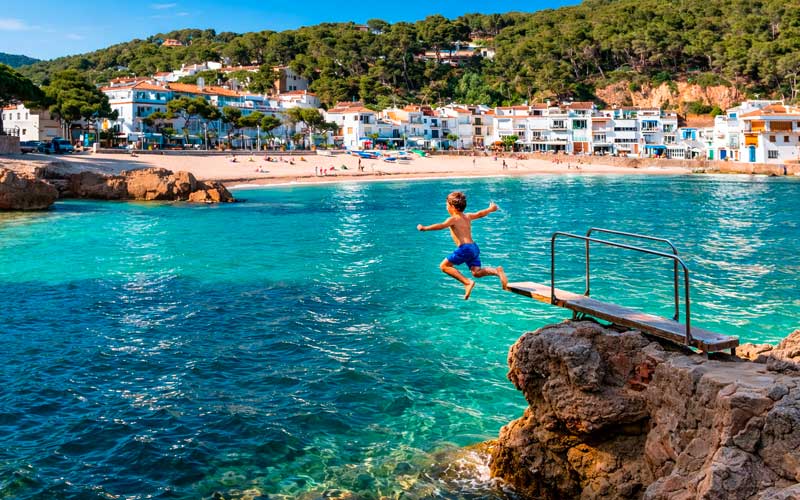
Tamariu is one of the best-preserved coastal settlements in the Palafrugell area. Its arc-shaped cove, with a sandy bottom and highly transparent waters, is flanked by pine groves that reach almost down to the shore and surrounded by low houses that preserve the scale and aesthetics of the old fishing village.
It is one of the most family-friendly and pleasant coves in the area, with a well-kept seafront promenade and a beautiful cove of crystal-clear waters that hides small corners such as a natural rock diving board, ideal for both children and adults.
What to see and do in Tamariu
- Tamariu cove: fine sand, transparent waters and shallow depth
- Fishermen’s huts and low-rise seafaring architecture
- Coastal Path towards Llafranc and towards Aiguablava
- Kayak route from Aiguablava: 2–3 hours round trip with a stop in Tamariu
- Seafront restaurants with fresh fish
- Rock diving board
Practical details
- 20 minutes from Hotel Aigua Blava
- Limited parking in high season; it is recommended to arrive before 9:30 or go in the afternoon
- Accessible on foot from Llafranc via the Coastal Path (45 minutes)
Calella de Palafrugell — the perfect seafaring postcard of the Costa Brava
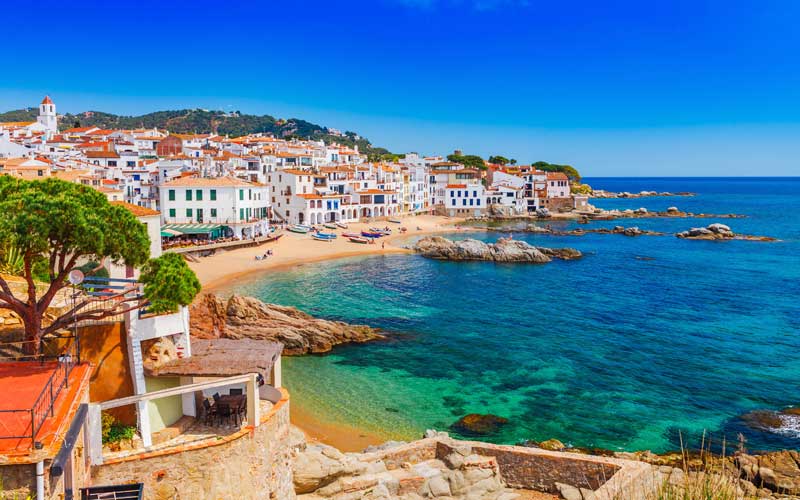
Calella de Palafrugell is the most photographed fishing village on the Costa Brava and one of the most recognisable in the Spanish Mediterranean. Its white fishermen’s houses built directly on the rocks facing the sea, the small coves alternating with the promenade and the absence of large buildings make it an almost perfect Mediterranean image.
Unlike other settlements that have lost their fishing identity, Calella preserves the original urban structure of the seafaring village: houses attached to the sea, streets running perpendicular to the coast.
The Cap Roig Gardens, just a few minutes away, add an exceptional botanical and cultural dimension: Mediterranean gardens on cliffs with sea views and the venue every summer of the Cap Roig Festival, one of the most important open-air music festivals in Spain.
What to see and do in Calella de Palafrugell
- Seaside promenade between coves: Canadell, Port Bo, Malaspina
- Original fishermen’s houses facing the sea
- Cap Roig Gardens: botanical gardens on cliffs with a music festival in summer
- Coastal Path towards Llafranc (45 minutes on foot, one of the most beautiful stretches)
- Seafaring gastronomy: restaurants with terraces over the sea and local produce cuisine
Practical details
- 20 minutes from Hotel Aigua Blava
- Limited parking in high season; it is recommended to park in Palafrugell and come down by bus
- The Cap Roig Festival takes place in July and August; tickets require advance booking
Llafranc — elegance and seafaring tradition
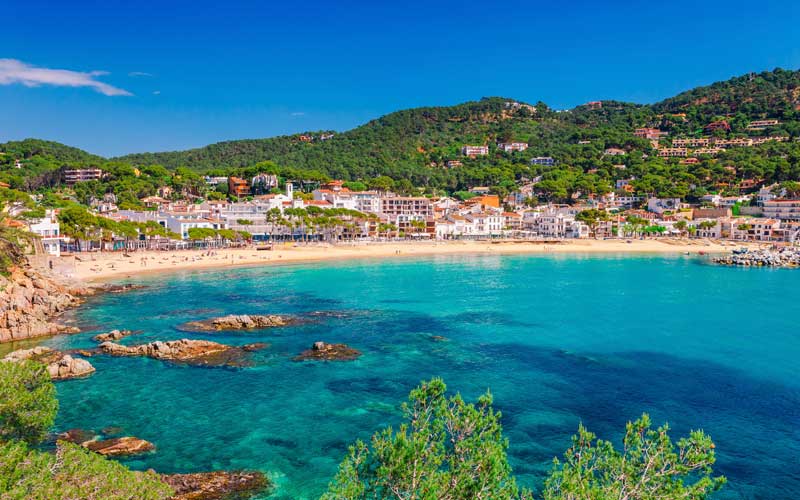
Llafranc is the most elegant coastal village in the Palafrugell area. Originally a fishing settlement, today it combines that seafaring tradition with a peaceful and refined atmosphere that makes it one of the most highly regarded destinations on the Costa Brava for those seeking tranquillity.
Its perfectly curved beach, its well-preserved seafront promenade and the climb up to the Sant Sebastià Lighthouse, one of the most spectacular viewpoints on the entire coast, make it especially complete for a half-day or full-day visit.
What to see and do in Llafranc
- Beach and seafront promenade: fine sand and peaceful atmosphere
- Sant Sebastià Lighthouse: panoramic viewpoint with views from Cap de Begur to the Medes Islands; climb on foot from the village in 30 minutes or by little train
- Coastal Path towards Calella de Palafrugell and towards Tamariu
- Marina with active seafaring atmosphere
- High-level gastronomy: several reference restaurants with terraces over the sea
Practical details
- 20 minutes from Hotel Aigua Blava
- Recommended visit: half day or full day combined with Calella
- The climb to the lighthouse is accessible for all levels
Route through the fishing villages of the Costa Brava
Route 1: Sa Tuna, Aiguafreda and S'Aixugador (1 day)
One of the most authentic experiences on the Costa Brava, combining coves, the Coastal Path and relaxation at the hotel.
Sa Tuna → Coastal Path → Hotel Aigua Blava
- 09:00 — Sa Tuna: walk around the cove and first hours on the beach
- 10:30 — Coastal Path: route towards Aiguafreda (left) or S'Aixugador, wilder and less crowded coves, (right)
- 12:30 — Return to the hotel
- 14:00 — Lunch at the hotel: peaceful lunch with sea views
- 16:00 — Hotel Aigua Blava: pool, beach or massage
- 18:00 — Coves within walking distance of the hotel or Aiguablava
Route 2: Tamariu and Cala Pedrosa (1 day)
A perfect area to combine beach, hiking and crystal-clear waters.
Tamariu → Cala Pedrosa → Hotel Aigua Blava
- 09:30 — Tamariu: beach and seafaring atmosphere
- 11:30 — Coastal Path towards Cala Pedrosa: wilder and less accessible cove
- 13:30 — Return to the hotel
- 14:00 — Lunch at the hotel
- 16:00 — Hotel Aigua Blava: pool, beach or massage
- 18:00 — Coves within walking distance of the hotel or Aiguablava
Route 3: Calella de Palafrugell and Llafranc (1 day)
The most iconic route on the Costa Brava, with white villages and Mediterranean atmosphere.
Calella de Palafrugell → Llafranc → Sant Sebastià Lighthouse
- 09:30 — Calella de Palafrugell: walk through the village and swim in its coves
- 13:30 — Lunch in Calella or return to the hotel to enjoy the restaurant with sea views
- 16:30 — Llafranc: walk around the harbour and climb to Sant Sebastià Lighthouse
- 19:00 — Sunset with sea views
- 20:30 — Return to the hotel
Route 4: Cadaqués and El Port de la Selva (1 day)
Cadaqués → El Port de la Selva → Monastery of Sant Pere de Rodes
09:00 — Arrival in Cadaqués
09:30 — Visit to the historic centre and the church of Santa Maria
11:00 — Dalí House-Museum in Portlligat (advance booking essential)
13:30 — Lunch in Cadaqués: fresh fish by the harbour
15:30 — El Port de la Selva: active fishing harbour and seafront promenade
17:00 — Monastery of Sant Pere de Rodes: panoramic views over the Gulf of Roses
19:00 — Return to the hotel (75 minutes)
When to visit the fishing villages of the Costa Brava
- June and September are the ideal months: the sea is at the perfect temperature, the villages are less crowded and the restaurants are open with their full offering. This is when these seafaring settlements show their best side.
- July and August are the months with the highest concentration of visitors. Sa Tuna, Calella de Palafrugell and Llafranc may be busier at midday. We recommend going early or renting a boat.
- Spring and autumn allow you to discover the fishing villages in their most authentic version. Some restaurants may have reduced opening hours out of season, but the atmosphere is incomparable.
The fishing villages of the Costa Brava preserve a Mediterranean essence that few coasts in Spain can offer today. Discovering them from Hotel Aigua Blava, based in Aiguablava, makes it possible to combine seafaring authenticity with the best coves on the Costa Brava in one single trip.