


The most beautiful medieval villages of the Costa Brava and Empordà
Visiting the most beautiful medieval villages on the Costa Brava is one of the best ways to discover the territory and understand its identity. Cobbled streets, castles, walls and arcaded squares are preserved here with an authenticity that is difficult to find in other Mediterranean destinations.
The province of Girona, located in the northeast of Catalonia, between Barcelona and the French border, has the highest density of charming villages in the whole region. In particular, the Baix Empordà and the Costa Brava bring together some of the most spectacular medieval villages, many of them just a few minutes from the sea, making it possible to combine heritage, gastronomy and landscape in a single visit.
In this guide you will discover the most beautiful medieval villages on the Costa Brava and its surroundings, with practical information, what to see in each one and how to organise them easily from Hotel Aigua Blava, in Begur.
The most beautiful medieval villages on the Costa Brava
These are the most beautiful medieval villages on the Costa Brava to visit on a route between sea, history and gastronomy.
- Peratallada — carved stone streets and one of the best-preserved medieval settlements
- Pals — the most iconic medieval ensemble, with walls, a Romanesque tower and sea views
- Begur — a medieval castle with sea views and a unique blend of history and colonial mansions
- Tossa de Mar — the only fortified medieval town by the sea on the Costa Brava
- Monells — an arcaded medieval square with an authenticity that is hard to find
- Palau-Sator — small and not very touristy, with its medieval essence intact
- Ullastret — a medieval settlement with walls and a unique Iberian past in Catalonia
- Peralada — historic heritage linked to wine and one of the most elegant ensembles in Empordà
- Sant Martí d’Empúries — a small medieval village by the sea, with direct access to the ruins of Empúries
- Púbol — a peaceful medieval village known for Gala Dalí’s castle
1. Peratallada - one of the best-preserved medieval settlements
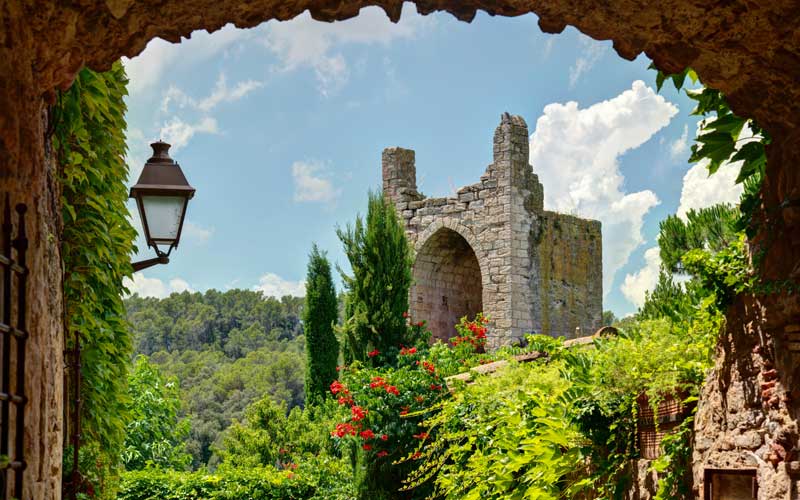
Peratallada literally means "carved stone" in Catalan, and the name perfectly defines this village in Baix Empordà. Its origins date back to the 10th century, when the first castle was built as a defensive point for the Carolingian territory against Saracen incursions.
What makes Peratallada exceptional is not one specific monument but the whole ensemble: the castle, the moat carved into the rock, one of the few preserved in Catalonia, the walls, the golden sandstone streets and the arcaded squares create an intact medieval setting that in summer takes on a unique light and warmth.
It was declared a Historic-Artistic Site in 1973 and remains one of the most visited and most photographed medieval villages on the Costa Brava.
What to see in Peratallada
- Palace-castle (10th-14th centuries): Romanesque origin with Gothic extensions; can be visited from the outside
- Medieval moat carved into the rock: one of the few preserved examples in Catalonia
- Walls and defensive towers of the medieval enclosure
- Plaça del Castell: the heart of the village, with restaurants beneath the medieval arches
- Church of Sant Esteve with its 12th-century Romanesque tower
- Streets without names: the maze of unmarked stone alleys is part of the experience
Practical information
- 20 minutes from Hotel Aigua Blava
- Recommended visit: 2-3 hours
- Village entirely pedestrianised; parking outside
- Best visited on weekdays or before 10:00 in high season
- High-level gastronomy: several renowned restaurants in Plaça del Castell
2. Pals — the most iconic medieval ensemble on the Costa Brava
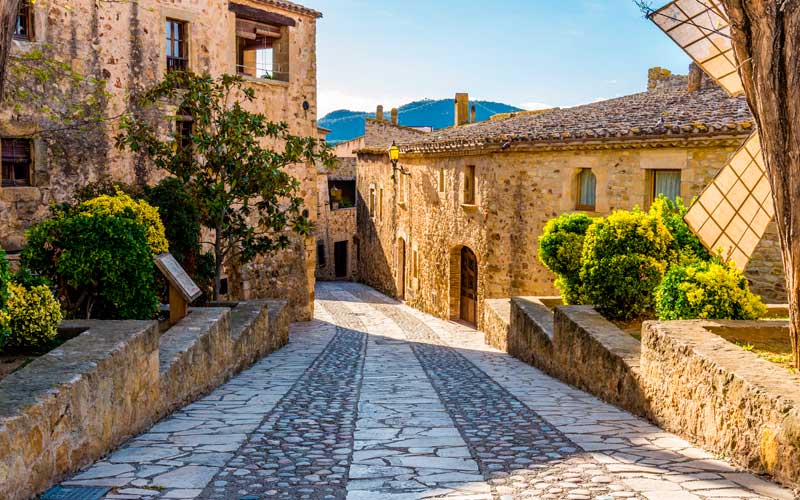
Pals is probably the most famous medieval village in Girona and one of the most visited in the whole Costa Brava. Its historic centre, known as El Pedró, occupies the top of a small hill from which the plains of Empordà and, on clear days, the Mediterranean Sea can be seen.
The origins of Pals date back to the 9th century, although the ensemble we see today is fundamentally from the 14th century. After centuries of abandonment and deterioration, the village underwent an exemplary restoration in the 1950s and 1960s that recovered its medieval appearance without falsifying it, making it a benchmark for heritage restoration in Spain.
What to see in Pals
- Torre de les Hores (11th century): Romanesque watchtower, symbol of the village, with a 14th-century bell
- Walled enclosure with stretches of wall and medieval bastions
- Barri del Pedró: cobbled streets, stone arches and restored medieval façades
- Mirador del Pedró: panoramic views over Empordà and the sea, one of the most impressive viewpoints on the Costa Brava
- Church of Sant Pere (15th century): Gothic, with a single nave and bell tower integrated into the walls
- Museum of the history of Pals: inside a medieval house, with explanations about the restoration of the village
Practical information
- 15 minutes from Hotel Aigua Blava
- Recommended visit: 2-3 hours
- Paid parking outside the enclosure
- Perfectly combined with Pals beach (5 minutes by car) for a full day out
- The viewpoint at sunset is one of the most special moments in the area
3. Begur — a medieval castle above the sea
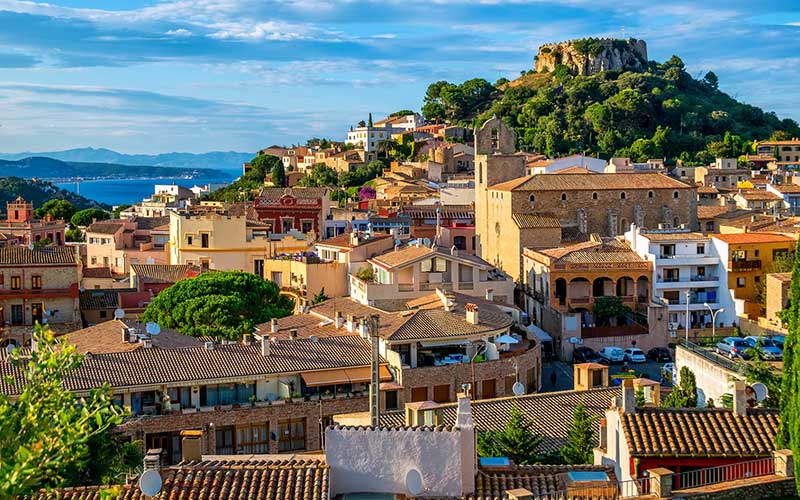
Begur is the most complete village in Baix Empordà and the closest to Hotel Aigua Blava, located just 5 minutes away by car. Its medieval dimension is often overshadowed by the fame of its coves and beaches, but the historic centre of Begur deserves a visit in its own right.
The Begur Castle, whose origins date back to the 11th century, crowns the village from the top of a 200-metre rock and offers 360-degree views over the Costa Brava, Empordà and the Pyrenees on clear days. Although the castle was destroyed by the troops of Philip IV in 1655 and only the ruins remain, the climb up to it is one of the best viewpoints in the whole province.
The historic centre of Begur combines medieval architecture with the striking Indian houses: 19th-century mansions built by emigrants who made their fortune in Cuba and Puerto Rico and returned to Begur with new architectural ideas and materials that coexist with the medieval stone in a unique blend.
What to see in Begur
- Begur Castle (11th century): ruins with 360-degree panoramic views, free access
- Medieval defence towers: Torre dels Moros and other defensive remains integrated into the village
- Indian houses: 19th-century colonial architecture mixed with the medieval fabric
- Historic centre: cobbled streets, 18th-century parish church and charming squares
- Nearby coves: Aiguablava, Sa Tuna, Sa Riera, Fornells and Aiguafreda, all less than 10 minutes away
- Viewpoints with impressive sea views
Practical information
- 5 minutes from Hotel Aigua Blava
- Recommended visit: 2-3 hours for the village; full day combined with coves
- The weekly market takes place on Wednesdays
- The climb to the castle takes around 15 minutes from the centre and does not require any special physical condition
4. Tossa de Mar — a fortified medieval town by the sea
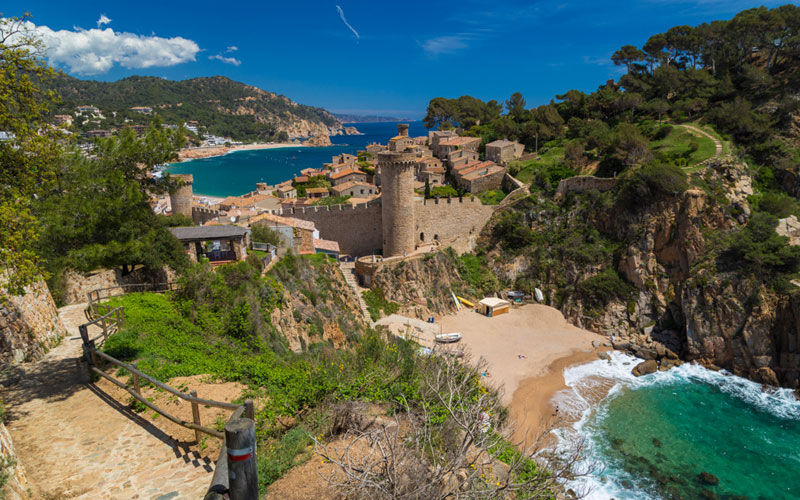
Tossa de Mar, located in the region of La Selva, is one of the most singular medieval villages on the Costa Brava and the only one that preserves a fortified town by the sea. Its walled enclosure, known as Vila Vella, dates from the 13th century and remains practically intact, with watchtowers, walls and cobbled streets descending to the beach.
The combination of medieval heritage and Mediterranean landscape makes Tossa one of the most complete visits on the Costa Brava, ideal both for a cultural getaway and for enjoying the sea.
What to see in Tossa de Mar
- Vila Vella (medieval walled enclosure)
- Tossa Castle and sea viewpoints
- Cobbled streets within the walls
- Platja Gran and nearby coves such as Cala Pola or Cala Giverola
- Coastal Path heading north
Practical information
About 1h 30 min from Hotel Aigua Blava
Recommended visit: half day or full day
It is advisable to arrive early in summer
5. Monells — the most authentic medieval square in Empordà
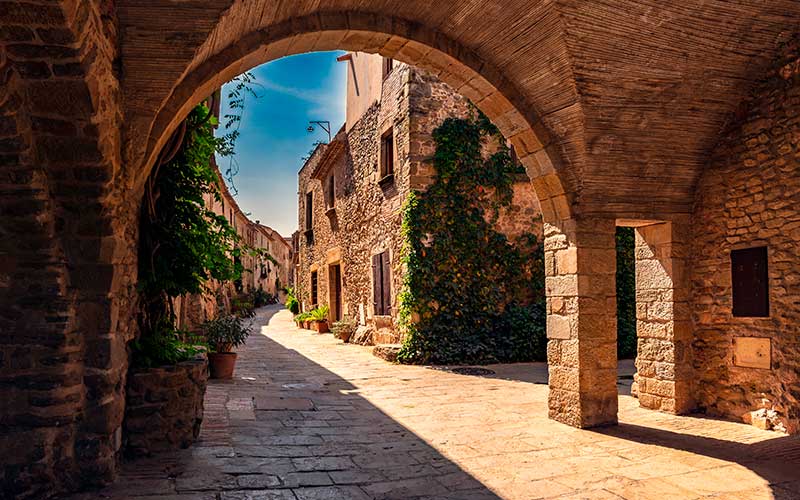
Monells is the best-kept secret of the medieval villages of Baix Empordà. Less known and less visited than Peratallada or Pals, it holds something harder to find than a castle or walls: real authenticity and human scale.
Its Plaça de l'Abat Oliva, with 14th-century semicircular arches and stone houses that have barely changed since the Middle Ages, is one of the most beautiful medieval squares and one of the best preserved in Catalonia. It does not have cafés with menus in four languages or souvenir shops. It has neighbours, silence and stone.
Monells appeared in the film "Spanish Affair 2" precisely because of that authentic and photogenic character that few medieval locations still preserve today.
What to see in Monells
- Plaça de l'Abat Oliva: one of the most beautiful medieval squares in Catalonia, with 14th-century arches
- Church of Sant Genís (12th century): Romanesque, with bell tower and well-preserved apse
- Medieval alleyways without signage or touristification
- Immediate rural surroundings: vineyards and Empordà fields just a few metres from the historic centre
Practical information
- 25 minutes from Hotel Aigua Blava
- Recommended visit: 1-2 hours
- Free parking outside
- Ideal to combine with Peratallada and Pals on the same half-day route
- Best on weekdays: at weekends in high season it has more visitors than its size comfortably allows
6. Palau-Sator — a small and authentic medieval settlement
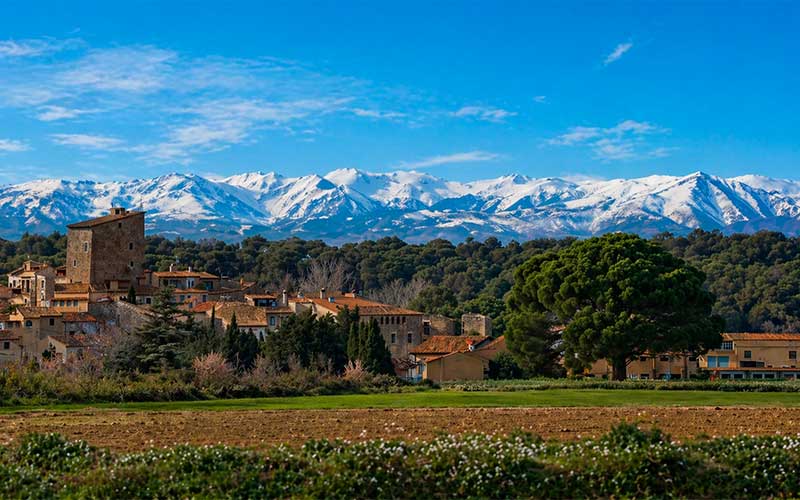
Palau-Sator is one of the most discreet medieval villages in Baix Empordà. Its name comes from the “Palace tower”, a 13th-century defensive structure that still dominates the small urban nucleus.
Unlike other better-known villages, Palau-Sator maintains a very small scale and a peaceful atmosphere, with stone streets, covered passageways and medieval houses that have remained virtually unaltered, allowing for an unusual sense of authenticity.
What to see in Palau-Sator
- Tower of the Hours (13th century)
- Cobbled streets and medieval passageways
- Small squares with traditional architecture
- Rural surroundings of Empordà
Practical information
- About 20 minutes from Hotel Aigua Blava
- Recommended visit: 1 hour
- Ideal to combine with Pals and Peratallada
7. Ullastret — medieval over an Iberian past
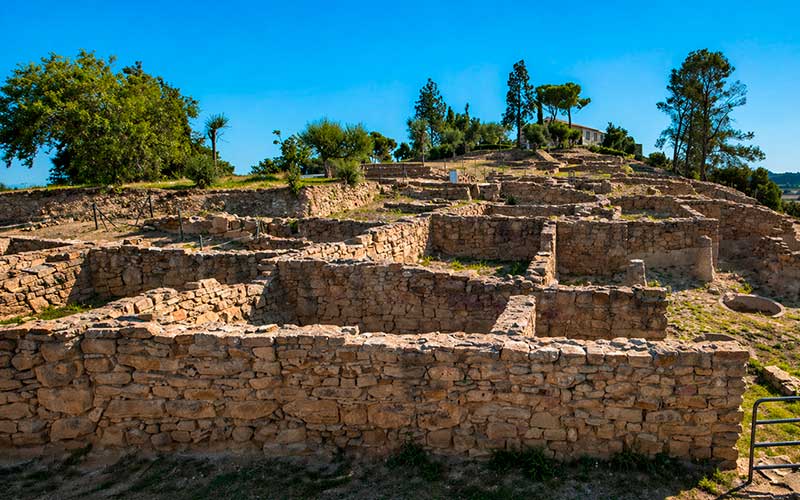
Ullastret combines two unique historical layers: a small medieval settlement and one of the most important Iberian archaeological sites in Catalonia. Its old quarter, situated on a hill, preserves walls, narrow streets and stone architecture reflecting its defensive origins.
Just a few minutes away is the archaeological complex of Ullastret, which makes it possible to understand the history of the territory from long before the Middle Ages, making the visit one of the most complete from a historical point of view.
What to see in Ullastret
- Medieval quarter with walls
- Church of Sant Pere
- Iberian archaeological site of Ullastret
- Archaeology museum
Practical information
- About 25 minutes from Hotel Aigua Blava
- Recommended visit: 1-2 hours (more if visiting the site)
- Combines well with Peratallada and Monells
8. Peralada — heritage, wine and history
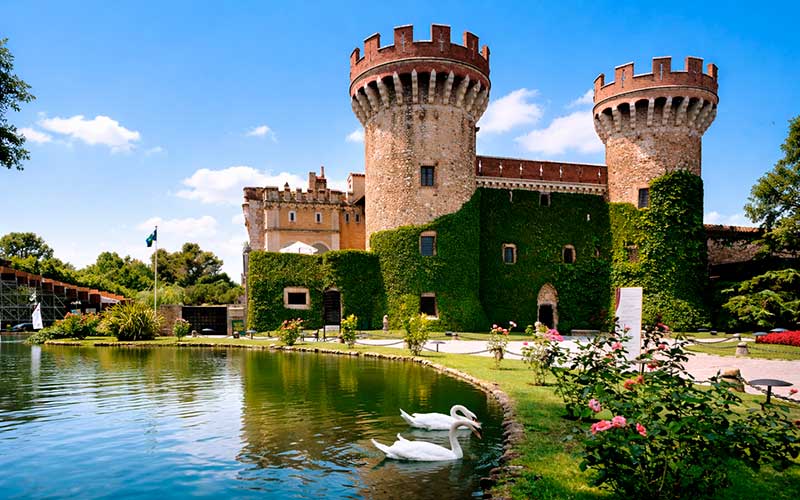
Peralada is one of the villages with the richest heritage in Alt Empordà. Its castle, surrounded by gardens, houses an important historical ensemble that includes a monastery, a library and one of the most outstanding wine museums in Catalonia.
Beyond its medieval architecture, Peralada stands out for its wine-growing tradition and for hosting top-level cultural events, such as its summer music festival, which combines history, culture and wine tourism in one single place.
What to see in Peralada
- Peralada Castle and its gardens
- Wine museum
- Church of El Carme and Gothic cloister
- Historic centre and walls
Practical information
- About 1h 15 min from Hotel Aigua Blava
- Recommended visit: 2-3 hours
- Ideal to combine with a winery route in Empordà
9. Sant Martí d’Empúries — history by the sea
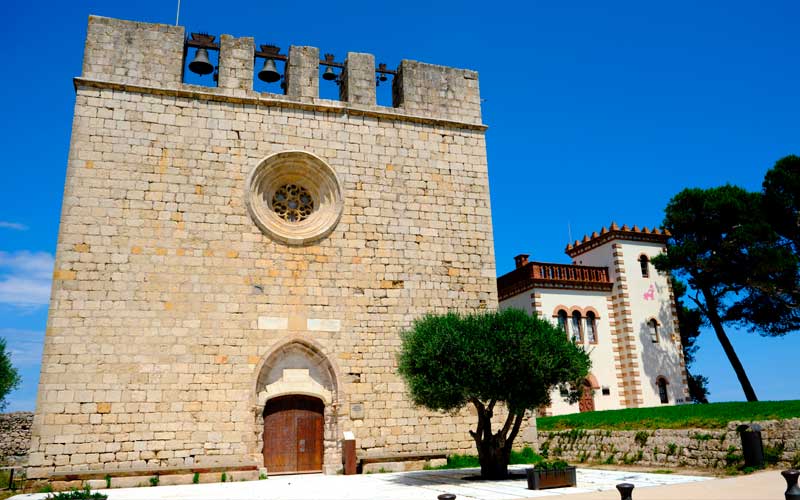
Sant Martí d’Empúries is a small medieval settlement located by the sea, known for its direct connection with the Greco-Roman ruins of Empúries. Its cobbled streets, central square and location facing the Mediterranean make it one of the villages with the greatest historical charm on the coast.
Unlike other inland medieval villages, here the experience combines heritage and beach, with direct access to one of the most important archaeological areas in Spain.
What to see in Sant Martí d’Empúries
- Medieval historic centre
- Central square and church
- Seafront promenade and beaches
- Ruins of Empúries (just a few minutes away on foot)
Practical information
- About 1h 15 min from Hotel Aigua Blava
- Recommended visit: 1-2 hours
- Ideal to combine with beach and cultural visit
10. Púbol — a small medieval village linked to Dalí
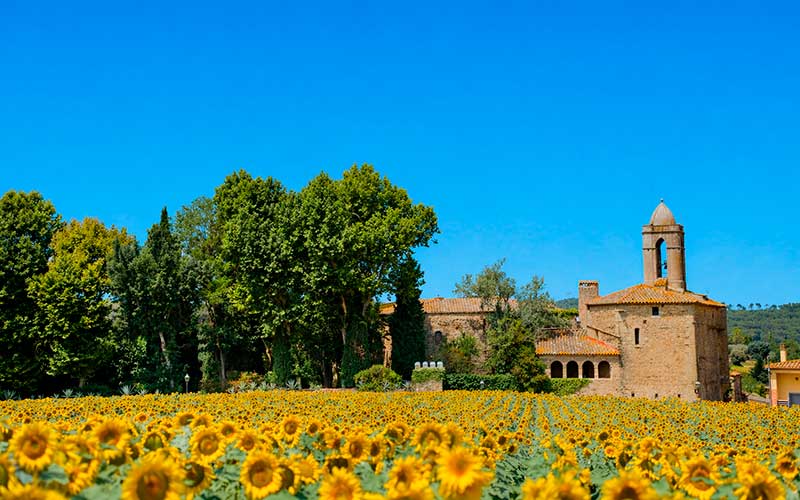
Púbol is a small and peaceful medieval village in Baix Empordà known for housing the Gala Dalí Castle, the residence of the artist’s muse. Its small size and low tourist influx make it a different visit, more intimate and unhurried.
The ensemble maintains its original medieval structure, with stone streets and a rural atmosphere, offering a quieter experience compared with other more popular villages in the area.
What to see in Púbol
- Gala Dalí Castle
- Stone streets of the medieval settlement
- Rural surroundings of Empordà
Practical information
- About 30 minutes from Hotel Aigua Blava
- Recommended visit: 1 hour
- Ideal to combine with Monells or Peratallada
How to organise the visit to the villages of the Costa Brava
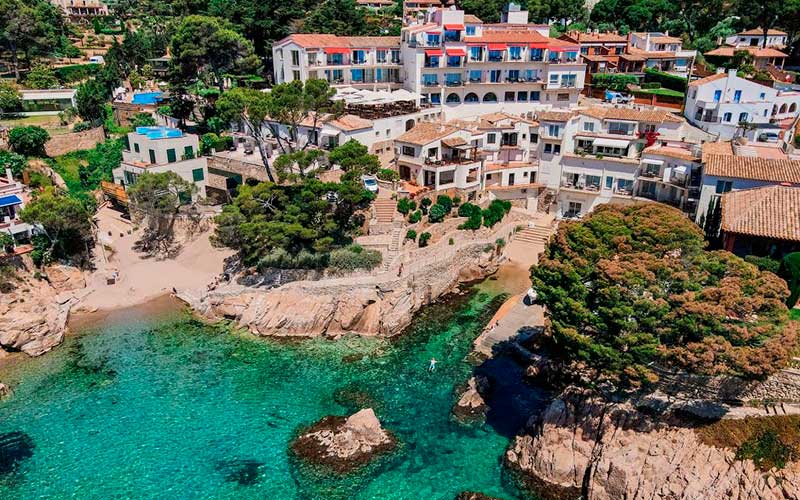
The best way to discover the medieval villages of the Costa Brava is to combine the cultural visit with moments of relaxation by the sea. In Baix Empordà, the proximity between coves and villages makes it easy to organise balanced days out without long journeys.
One of the most recommended routes consists of enjoying the sea in the morning and visiting a medieval village in the afternoon, when the light is softer and the atmosphere more authentic.
Recommended route: coves and a medieval village in one day
Coves (morning) → Hotel Aigua Blava → Medieval village (afternoon)
- 09:30 — Coves of Aiguablava or Begur: swimming and walk along the coast (2–3 hours)
- 13:30 — Return to the hotel
- 14:00 — Lunch at the hotel with sea views
- 16:00 — Hotel Aigua Blava: pool, beach or massage (2 hours)
- 18:30 — Medieval village: walk and atmosphere at sunset (1.5 hours)
- 19:30 — Drink or soft drink in the square
- 20:30 — Return to the hotel for a relaxed dinner
This type of route allows you to enjoy the sea at the best times of the day and discover the medieval villages at their most special moment, combining heritage, landscape and gastronomy in a single day.
When to visit the medieval villages of the Costa Brava
The medieval villages of the Costa Brava and the Empordà can be visited all year round, but there are especially recommended times. Spring and autumn offer the best balance between weather, light and visitor numbers, allowing you to walk around them more peacefully and better enjoy their architecture and surroundings.
In summer, it is recommended to visit them first thing in the morning (before 10:00) or at the end of the day (after 18:00), when the light is softer and there are fewer visitors. This timetable also makes it possible to combine the visit with nearby coves, making the most of the best hours for each activity.
Tips for visiting the medieval villages of the Costa Brava
- Footwear: it is essential to wear comfortable footwear with non-slip soles. The cobbled streets of villages such as Peratallada or Pals have irregularities and slopes that can be slippery, especially after rain.
- Parking: most medieval villages are pedestrianised or have restricted access to the interior. The car is always left outside. In high season, it is recommended to arrive before 10:00 or in the afternoon to avoid parking problems.
- Gastronomy: the villages of Empordà have an excellent gastronomic offer, with high-level restaurants spread throughout the region. In addition, Hotel Aigua Blava has one of the best-rated restaurants on the Costa Brava, with sea views, so it is recommended to book in advance.
- Guided visits: some villages such as Peratallada or Pals offer audio guides or interpretive information that help to better understand their history and heritage during the visit.
- Combination with the beach: many of the medieval villages of Baix Empordà are less than 20–25 minutes from some of the best coves on the Costa Brava, which makes it easy to combine culture and sea in the same day.
Exploring the medieval villages of the Costa Brava is much more than a cultural visit: it is a way of understanding the territory, its history and its rhythm.
From Hotel Aigua Blava, this experience can be enjoyed naturally, combining sea, heritage and gastronomy in a privileged setting.