


Самые красивые деревни Жироны: полный путеводитель
The province of Girona, located in the northeast of Catalonia between Barcelona and the French border, brings together a concentration of medieval heritage, natural landscapes and Mediterranean culture that is difficult to find anywhere else in Europe. Its regions of Empordà, La Garrotxa and Ripollès are home to some of the most beautiful villages in Girona: intact medieval settlements, whitewashed seaside villages and almost unknown corners that preserve the essence of the territory.
Beyond the Costa Brava, one of the most highly regarded coastlines in the Mediterranean for its coves, cliffs and crystal-clear waters, inland Girona hides a network of charming villages that surprises first-time visitors and captivates those who return.
In this guide you will find the most beautiful villages in Girona, with practical information, what to see in each one and how to visit them from Hotel Aigua Blava in Begur.
These are the most beautiful villages in Girona that you should not miss.
- Cadaqués — the most iconic village on the Costa Brava
- Besalú — the best-preserved medieval village in the province
- Peratallada — stone streets and a unique atmosphere
- Rupit — a mountain village with a hanging bridge and spectacular surroundings
- Pals — a medieval ensemble with sea views
- Tossa de Mar — a fortified medieval town by the sea
- Calella de Palafrugell — the perfect Mediterranean postcard
- Begur — castle, coves and colonial mansions
- Monells — an arcaded square and authentic silence
- Castellfollit de la Roca — perched on a unique volcanic cliff
The 10 most beautiful villages in Girona
1. Cadaqués
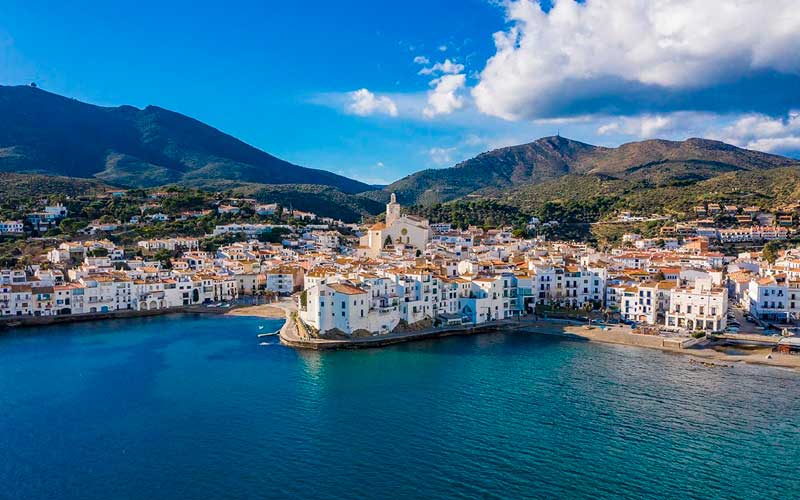
Cadaqués is the most famous village in Girona, and one of the most photographed in the whole Mediterranean. Nestled at the easternmost point of the Iberian Peninsula, surrounded by the Cap de Creus Natural Park and accessible only by a winding mountain road, it preserves a unique sense of isolation and personality that no other Costa Brava village can match.
Its white houses cascading down over the bay, the baroque church of Santa Maria and its cul-de-sacs attracted artists, writers and travellers from all over the world for decades. Salvador Dalí lived in nearby Portlligat for decades and left an indelible cultural mark on Cadaqués.
What to see in Cadaqués
- Historic centre and white streets by the harbour
- Church of Santa Maria (18th century) with Dalí altarpiece
- Dalí House-Museum in Portlligat (advance booking essential)
- Cap de Creus, the easternmost point of the Peninsula
- Nearby coves: Cala Nans, Es Llané, Platja Gran
Practical information: around 75 minutes from Hotel Aigua Blava. In summer, car access is regulated; arriving before 10 am is recommended. A full visit including Portlligat takes almost a whole day. It combines well with El Port de la Selva on the same Alt Empordà route.
2. Besalú
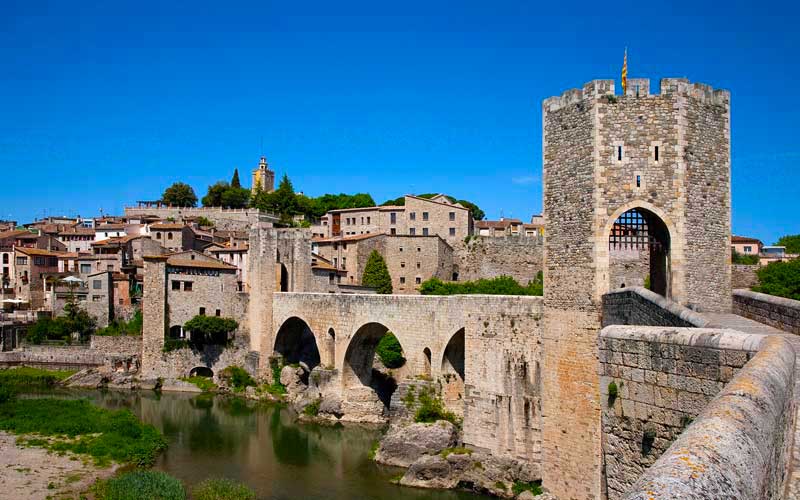
Besalú, located in the region of La Garrotxa, in the inland area of the province of Girona, is for many the best-preserved medieval village in Catalonia. Its 12th-century Romanesque bridge over the Fluvià River is one of the most recognisable images of Girona and one of the most photographed monuments in northeastern Spain.
The historic centre of Besalú was declared a Historic-Artistic Site and still preserves its former Jewish quarter, with the only medieval miqvé (Jewish ritual bath) open to visitors in Spain, the collegiate church of Sant Pere, the church of Sant Vicenç and an urban layout of narrow streets and arcaded squares that has barely changed in centuries.
What to see in Besalú
- 12th-century fortified Romanesque bridge
- Medieval miqvé (guided visit, unique in Spain)
- Collegiate church of Sant Pere (11th century)
- Plaça de la Llibertat with its medieval arcades
- Casa Cornellà and the former palace of the Counts of Besalú
Practical information: about 50 minutes from Hotel Aigua Blava. It can easily be visited in half a day. Free parking next to the bridge. It combines very well with a visit to La Garrotxa and the village of Santa Pau.
3. Peratallada
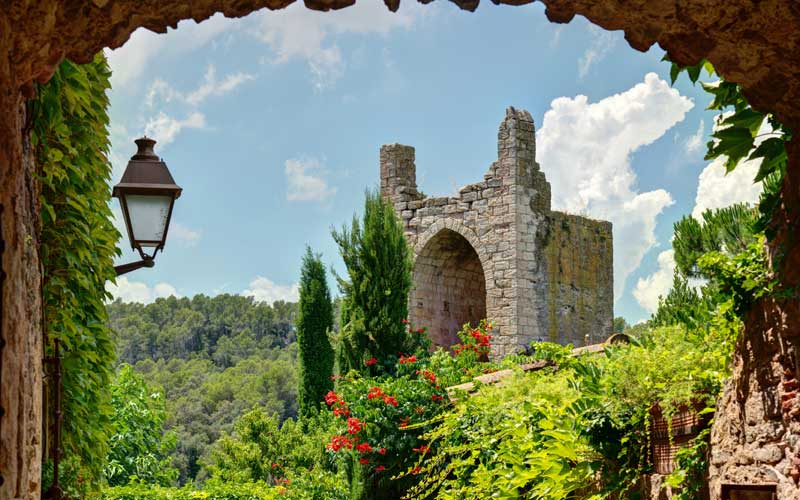
Peratallada, located in the municipality of Forallac, in the Baix Empordà, is one of the best-preserved medieval villages in Girona. It lies in one of the areas with the highest concentration of historic settlements in Catalonia, very close to charming villages such as Pals, Palau-Sator or Monells, and only a few kilometres from the coves of the Costa Brava.
Peratallada is one of those places where time stands still. Its name in Catalan literally means “carved stone”, and rightly so: the whole village seems sculpted out of rock, with streets, walls, arches and façades carved in sandstone that takes on a spectacular golden hue in summer.
Declared a Historic-Artistic Site, Peratallada preserves its 10th-century castle, its Romanesque church, its moat, one of the few preserved in Catalonia, and a network of charming alleys and squares that make it one of the most special medieval villages in Girona.
What to see in Peratallada
- Palace-castle (10th-14th centuries), viewable from the outside
- Church of Sant Esteve with its Romanesque tower
- Medieval moat and walls
- Plaça del Castell, perfect for sitting down for a drink
- Stone streets with bougainvillea on the façades
Practical information: around 20 minutes from Hotel Aigua Blava. Visit of 2-3 hours. Pedestrian village, paid parking outside. In spring, rapeseed fields turn the landscape yellow; in July-August, sunflowers create one of the most photogenic scenes in Empordà.
4. Rupit
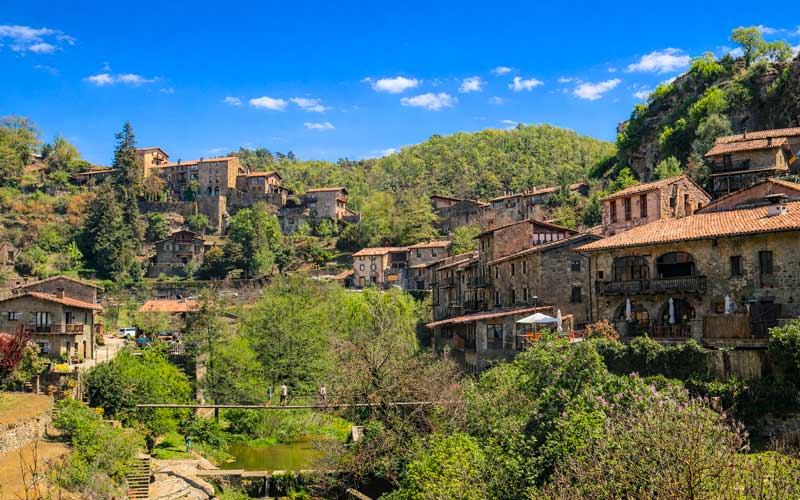
Rupit, officially Rupit i Pruit, is one of the most beautiful mountain villages in Girona, located in the Collsacabra area, between the inland part of the province and the first foothills of the Pre-Pyrenees. Its stone houses, its famous hanging bridge and its natural surroundings of forests and cliffs make it one of the most special places to visit in the province.
Rupit offers a calmer experience, closely linked to nature, ideal for those looking for green landscapes, hiking routes and an authentic atmosphere.
What to see in Rupit
- Hanging bridge over the Rupit stream
- Perfectly preserved stone old town
- Church of Sant Miquel
- Route to Salt de Sallent (the highest waterfall in Catalonia)
Practical information: approximately 1 h 15 min from Hotel Aigua Blava. Recommended half-day visit. Ideal to combine with hiking routes in the surrounding area.
5. Pals
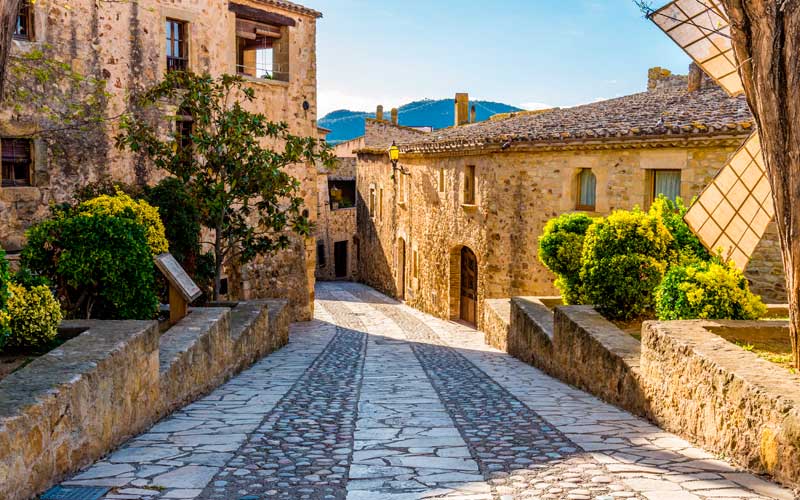
Pals, located in the Baix Empordà, is one of the most beautiful medieval villages in Girona and one of the most visited on the Costa Brava. Its 14th-century walled enclosure, defensive towers and cobbled streets with sea views form one of the most photogenic medieval ensembles in the province.
Located in an agricultural area closely linked to the Empordà landscape, Pals is surrounded by rice fields and near some of the most representative wineries in the region, allowing the cultural visit to be combined with gastronomic and wine tourism experiences.
Situated just a few minutes from Hotel Aigua Blava, Pals combines a visit to the historic centre with quick access to Pals beach, one of the longest in the area, and to the most emblematic golf course in the district. In addition, the Pals rice fields stretch out around it, a unique landscape on the Costa Brava that changes completely depending on the time of year and forms part of the territory’s identity.
What to see in Pals
- Walled enclosure and Torre de les Hores (14th century)
- Medieval stone quarter and cobbled streets
- Viewpoint with sea and Empordà views
- Church of Sant Pere
- Pals beach (5 minutes by car)
Practical information: around 15 minutes from Hotel Aigua Blava. Recommended visit of 2-3 hours. In summer, combine the morning at Pals beach with a visit to the village in the afternoon, going up to the viewpoint at sunset. In July, “La Nit de les Espelmes” is held, when the old town is lit by candles and hosts artistic installations.
6. Tossa de Mar
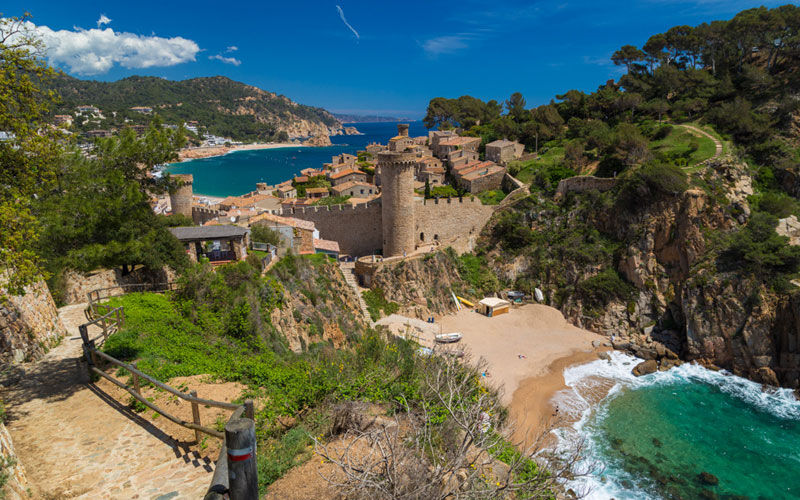
Tossa de Mar, located in the region of La Selva, at the southern end of the Costa Brava, is one of the most spectacular villages in Girona and one of the few that preserves a fortified medieval town by the sea. Its walled enclosure, known as the Vila Vella, is unique on the Catalan coast and offers one of the most iconic images of the Catalan shoreline.
Surrounded by walls, watchtowers and cobbled streets, Tossa combines history, beach and scenery in one place. From its viewpoints there are open views over the Mediterranean, especially at sunrise and sunset.
What to see in Tossa de Mar
- Vila Vella (medieval walled enclosure)
- Tossa Castle and viewpoints
- Platja Gran and nearby coves such as Cala Pola or Cala Giverola
- Municipal Museum of Tossa
- Coastal Path heading north
Practical information: approximately 1 h 30 min from Hotel Aigua Blava. Recommended visit of half a day or a full day. In summer it can get quite busy; it is advisable to arrive early and stay for the day in its coves.
7. Calella de Palafrugell
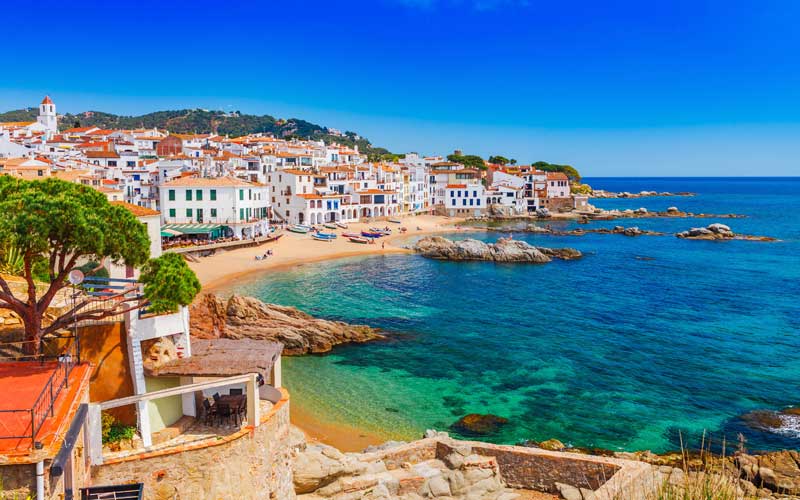
Calella de Palafrugell, located in the Baix Empordà, is one of the most beautiful seaside villages and one of the most photographed on the Costa Brava. Its white fishermen’s houses directly facing the sea, the small coves alternating with the seafront promenade and the absence of large buildings make it an almost perfect Mediterranean postcard.
Very close by is Llafranc, another of the most charming villages in the area, connected to Calella by one of the most beautiful and accessible sections of the Coastal Path, which can be walked in about 20 minutes by the sea.
What to see in Calella de Palafrugell
- Seafront promenade and fishermen’s coves (Canadell, Port Bo, Malaspina)
- Les Voltes de Port Bo, the most iconic group of arches by the sea in the village
- Viewpoint and Port Bo area, one of the best spots for the most representative photo of Calella
- Cap Roig Gardens, with a music festival in summer
- Coastal Path towards Llafranc (20 min on foot)
- Historic centre of Palafrugell (4 km away)
Practical information: 20 minutes from Hotel Aigua Blava. In high season parking is limited; arriving early or parking in Palafrugell and taking the bus down is recommended.
8. Begur
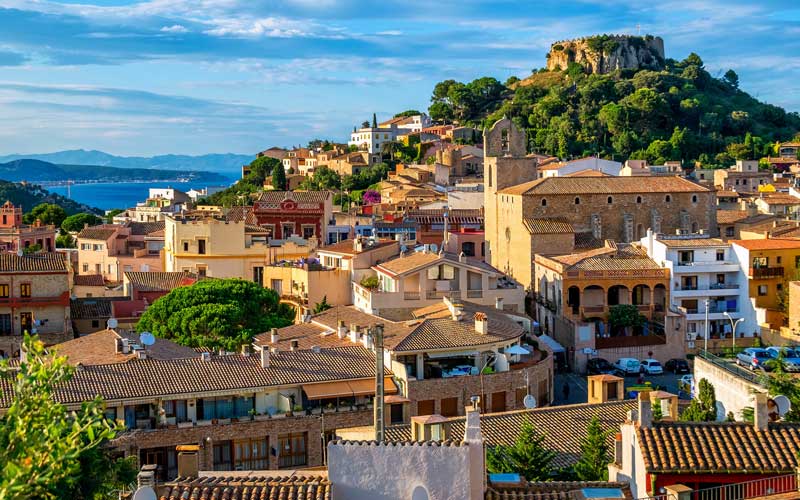
Begur is, for many visitors, the highlight of the trip. Located just a few minutes from Hotel Aigua Blava, this Baix Empordà village combines history, landscape and a strong personality like few others.
Its 11th-century medieval castle crowns the village and offers 360° views over the Costa Brava, Empordà and the Pyrenees on clear days. The historic centre is dotted with colonial mansions, houses built by emigrants who made their fortune in Cuba and Puerto Rico at the end of the 19th century, giving Begur a unique architectural character on the whole Catalan coast.
From Begur you can reach in minutes some of the most beautiful coves in Catalonia: Aiguablava, Sa Tuna, Sa Riera, Aiguafreda and Fornells, each with its own character.
What to see in Begur
- Begur Castle and its panoramic views
- Historic centre and colonial mansions
- Coves: Aiguablava, Sa Tuna, Sa Riera, Fornells, Aiguafreda
- Coastal Path from any of its coves
- Its viewpoints overlooking the sea
Practical information: 5 minutes from Hotel Aigua Blava. One of the best ways to enjoy Begur is to stay near its coves to make the most of the day by the sea and go up to the village in the late afternoon and evening, when the atmosphere is livelier. Going up to the castle at sunset is recommended.
9. Monells
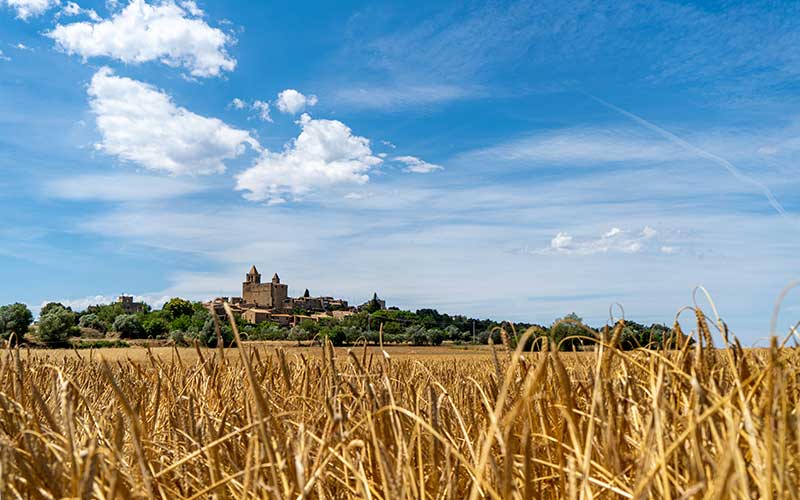
Less well known than Peratallada or Pals, Monells is one of the best-kept secrets of the Baix Empordà. Its arcaded square, with semicircular arches and stone houses that have barely changed since the 14th century, is one of the most beautiful and authentic in the whole district.
It does not have great monuments or museums. What it does have is something harder to find: silence, tranquillity and authenticity. It is a perfect place to wander at your own pace and discover without rushing, combining the visit with other nearby medieval villages such as Palau-Sator or Ullastret, or even with the Iberian ruins of Ullastret.
What to see in Monells
- Plaça de l'Abat Oliba, one of the most beautiful in Empordà
- Church of Sant Genís
- Medieval stone houses and cul-de-sacs
- Immediate rural surroundings, ideal for walking
Practical information: 25 minutes from Hotel Aigua Blava. Short visit, 1-2 hours. It can easily be combined with Peratallada and Pals in the same medieval villages route.
10. Castellfollit de la Roca
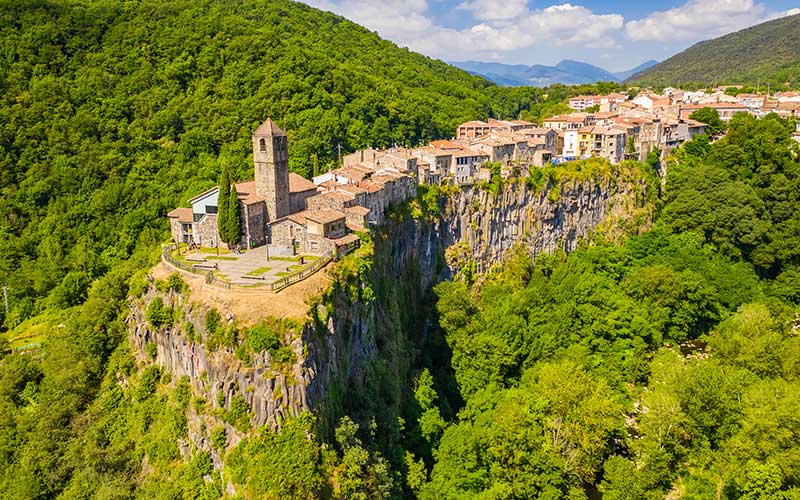
Castellfollit de la Roca, located in the region of La Garrotxa, in the inland part of the province of Girona, is one of the most visually spectacular villages in Catalonia. It is literally built on a basalt cliff over 50 metres high, formed by lava flows thousands of years ago, in the heart of the Garrotxa Volcanic Zone Natural Park.
The image of the village hanging over the precipice above the Fluvià River is one of the most singular in Catalonia. It can be visited in little time but leaves a lasting impression.
What to see in Castellfollit de la Roca
- Basalt cliff viewpoint (essential)
- Church of Sant Salvador at the end of the promontory
- Meat and cured meats museum (local speciality)
- Natural surroundings of La Garrotxa
Practical information: about 1 hour from Hotel Aigua Blava. It combines perfectly with Besalú and with a route through the Garrotxa Natural Park and the village of Santa Pau.
Exploring the most beautiful villages in Girona means discovering a territory where every corner has its own identity: from perfectly preserved medieval villages inland to small seaside towns opening out to the Mediterranean.
The combination of history, landscape and way of life makes every visit different, allowing you to explore the Costa Brava and Empordà at your own pace, alternating culture, nature and the sea.
Hotel Aigua Blava, in Begur, is an excellent starting point for comfortably discovering some of the most beautiful villages in Girona, both on the coast and inland, and enjoying a complete experience in one of the most attractive destinations in the Mediterranean.